These independent resources do not require an inquiry to the firm.
Before hiring an adviser
Look up both the individual and the firm. In BrokerCheck, read the employment history, disclosures and explanations, not just the registration status. A complaint is not a finding; a clean record is not a guarantee.
Ask for the product name, written terms, fees and custodian. If an offer supposedly comes from a brokerage, call its published office number and ask whether the firm approved the investment. Do not verify an offer through the person selling it.
Keep statements, confirmations, messages, transfer instructions and a dated timeline. Contact the bank or brokerage through a known channel. Be wary of anyone demanding an upfront fee to get the money back.
Courtney and Patrick discuss how criminals use crypto and AI in investment scams, why older investors are targeted and what digital asset recovery can involve. A Meyer Wilson Werning video, separate from David’s upcoming podcast.
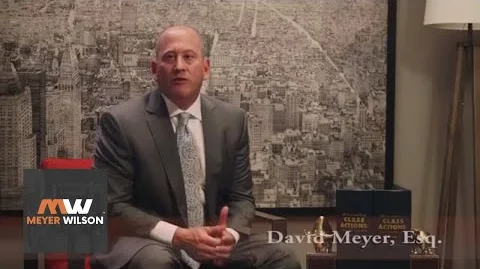
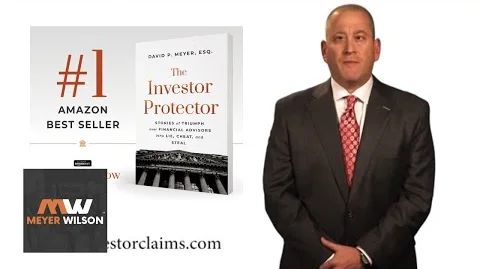
David describes the book in three parts: what to check before hiring an adviser, what happened to investors he represented, and what to do if you suspect fraud. He also explains why he wrote for accountants and lawyers who often see warning signs first.
Two accounts at the same brokerage can give the broker very different authority. David explains discretionary and non-discretionary accounts, and why the first place to look when you find an unexpected trade is the paperwork you signed.
A securities-backed loan lets someone borrow without selling investments. David explains the trade-off: if the collateral falls in value or the lender calls the loan, the borrower may have to repay it or sell securities at precisely the wrong time.
An IRA already offers a tax advantage. David suggests separating that fact from the annuity sales pitch: what income guarantee or other benefit are you buying, what are the ongoing costs, and what would it cost to get out?
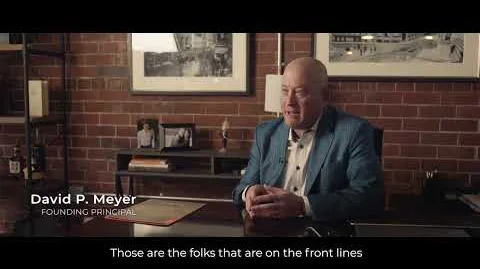
An unexplained loss on a tax return or account statement can be the first reason to ask a client about an investment. In this short film David describes the role trusted professionals can play, especially when an older client has difficulty reviewing the records alone.
Read the reports, the data and the signed letters. A lawyer’s comment on a proposed rule is advocacy, not a regulator’s conclusion.
When an arbitration award goes unpaid
Hugh Berkson and David P. Meyer examined FINRA customer awards for PIABA. In 2020, 19 of 64 customer awards went unpaid. Measured in dollars rather than cases, about $5.05 million of $20.90 million awarded went unpaid. The authors proposed a national recovery pool.
For investors: When someone cites an arbitration win rate, ask a second question: how much of the money awarded did investors collect?
David P. Meyer, Jason R. Doss and Lisa Bragança studied 700 expungement awards decided from August 2019 through October 2020. In 636, arbitrators granted at least some of the requested removal. The authors examined proceedings brought by brokers after the underlying customer dispute, when the customer might not participate.
For investors: A complaint is not a finding of wrongdoing. A record without complaints is not a guarantee, either. The study explains one reason a public history can be incomplete.
When a broker offers an investment outside the firm
In her February 2026 comment to the SEC, Courtney M. Werning opposed proposed FINRA Rule 3290. She argued that narrowing the outside activities brokers must report would make it harder for firms to spot conflicts, unregistered offerings and Ponzi schemes. The letter is Werning’s position, not an SEC finding.
For investors: An offer from a familiar broker need not be an offer from the brokerage. Ask the firm directly whether it has approved the investment and who will supervise it.
What a brokerage can see before money changes hands
David submitted a separate comment on the same proposal. Drawing on cases involving brokers who sold investments outside their firms, he argued that advance disclosure gives supervisors a chance to identify conflicts before clients lose money, rather than reconstruct the transaction afterward.
For investors: If a recommendation will not appear on a brokerage statement, find out where it will be recorded and which firm will answer questions about it.
The firm explains its position on oversight of a broker’s outside activities. Its lawyers’ signed comments are available separately in the SEC’s public docket.